
|
|
#1
|
|||
|
|||
 paint spray gun
Hey guys,
I'm going to get a paint gun to repaint the V this spring. Has any one used one of the two below? If you have what did you think of it. http://www.harborfreight.com/air-too...gun-43760.html or http://www.harborfreight.com/air-too...kit-94572.html Thanks ST
__________________
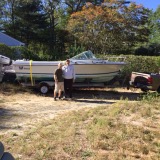 1986 V20 Cuddy in pieces  "WILD FINN" 
|
|
#2
 11-04-2010, 01:19 PM
|
|||
|
|||
|
Be careful. Anyone who's ever painted anything with a Wagner Power Painter knows how frustrating it is to get half way through a job and have the damn thing clog up and start dribbling all over itself. I would be careful with cheap spray guns. If you decide to try it, make sure you filter the paint thoroughly, thin it per manufacturer recommendation and make sure the air getting to the gun is clean and dry.
|
|
#3
11-04-2010, 03:00 PM
|
|||
|
|||
|
Both Guns shown are quite the opposite in regards to what you will be using it for. If the paint is thinned and good atomization is desire for a clean and smooth finish the first gun is your choice. Its what I used to finished my Cowling.
If its heavy or thick two part epoxy or polyurethane paint then the gravity HVLP is your best bet. Its what I used to shoot Gel Coat on my Hull. I will highly recommend you buy your paint first and test on a scrap material. Be sure to test at various pot pressure etc. I personally own both el cheapo guns shown, I however must mentioned also they are my favorite over my very expensive collections. Please pay attention to the tip size in your selection process Bare in mind I am the Guy who can't get paint to dry. See my Engine project in another thread :)
|
|
#4
11-04-2010, 07:05 PM
|
||||
|
||||
|
I like the gravity feed gune, you can run lower pressures, put more paint on teh surface and less blowing around in the air. If you buy a gravity gun, go ahead and buy two of the racks you set them in, you'll need one on teh mixing bench, and one near the job. Worst part about a gravity gun is you can't set them down
|
|
#5
11-04-2010, 08:44 PM
|
||||
|
||||
|
Obviously, they are two different guns. I have the first one and I like it a lot. It's not quite as good as my DeVilbiss, but it's a good knock-off and it
gets the job done nicely. (and it's cheap enough that if I screw up on cleaning it I can just throw it away and get a new one) I've used it to paint a number of trailers before selling them and the finish has always been "like new". The advantage of a HVLP gun is, of course, the low overspray that you get and the thicker paints that you can spray. I don't own one so I cannot comment on their suitability for your application. Since overspray is never a problem for me I'd go with the first one. I like that fact that it can blast paint into tiny cracks and corners, which, for me, is important. I'm not sure if the HVLP could do that. Also, I cannot stress highly enough the importance of making sure that whichever gun you use, make sure the air coming to your gun is bone dry. Just a few drops of atomized water can (and will) ruin a paint job. Put primary and secondary filters on your compresser. It's cheap money compared to the need to strip and repaint.
__________________
1987 V20 w/1987 150HP Yamaha on a Shoreland'r Trailer 1978 16.5 Airslot w/1996 120HP Force on a Four Winns trailer 1996 V21 w/1993 200HP Mercury on a Shoreline Trailer All towed by a 5.7L Hemi Durango. If God didn't have a purpose for us we wouldn't be here, so Live simply, Love generously, Care deeply, Speak kindly. (Leave the rest to God)  Silence, in the face of evil, is itself evil. Not to speak is to speak, not to act is to act. God will not hold us guiltless. Last edited by Destroyer; 11-04-2010 at 08:50 PM.
|
|
#6
11-05-2010, 08:25 AM
|
||||
|
||||
|
I like the Binks HVLP guns in use with the binks pressure pot. The Sharpe 775 is a nice gun not to high in price and has nice spray pattern. the old trusty is always a Binks #7 best all around gun. the Binks 2001 HVLP is my gun of choice. your finish is only as good as the gun you use will allow.
cheap gun = poor paint job http://www.autorefinishdevilbiss.com/products.php?pg=14  here's the pressure version i use http://www.spraygunworld.com/product...001P%20Gun.htm  now here is the Sharpe 775 i have 5 or 6 of these are good guns and good price cheap rebuild kits http://www.spraygunworld.com/product...%20SHP6835.htm 
__________________
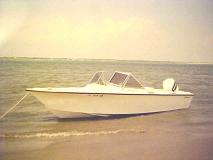 1978 V20 Cuddy w/ 225 Johnson. And Several other boat's Last edited by Skools Out; 11-05-2010 at 08:39 AM.
|
|
#7
11-05-2010, 09:02 AM
|
|||
|
|||
|
Although this gun looks very much like the HVLP that you are looking at it sprays much better than any other HVLP that you can get at HF. Google reviews of the part number and you will see what I mean.
http://www.harborfreight.com/high-vo...gun-66222.html I bought a couple a ways back when they were on sale for $20 but since then HF must have realized that they had a good item and the price is now normally $60 but I just checked and it is on sale for $40. My son bought one of the cheaper HF HVLPs and used it to spray filler primer on his car and although the gun looks just like the 66222 I can tell you that it doesn't shoot anywhere near as well.
|
|
#8
11-05-2010, 10:22 AM
|
|||
|
|||
|
love it! Thanks for all the info. I'm still looking at paint so I think I'll wait until I decide on the paint. I have a lot of work to do before I paint anyways. I just pulled the engine to work on it and get ready for a transom replacement. The list just gets bigger and bigger
 . Once I have the transom done I think then do a little more looking around. Thanks for all the help . Once I have the transom done I think then do a little more looking around. Thanks for all the help
__________________
1986 V20 Cuddy in pieces "WILD FINN"
|
|
#9
11-05-2010, 11:34 AM
|
|||
|
|||
|
If you are getting an HVLP type, pay attention your your compressor's CFM rating. HVLP stand for high volume, low pressure. You might be surprised just how much volume some guns require.
I bought an Asturo AOM from spraygunworld.com a few years ago specifically because my compressor is somewhat lacking in the volume department. This gun requires less CFM than some other models. With an extra air tank hooked up, I manage to get good results. But it really kept my compressor running when I painted an automotive hood. A larger compressor is extremely high on my list if stuff to acquire before I paint again. Someone else mentioned this already, but it is so important that it bears repeating - buy a good filter to keep the water out! P.S. I personally would not shoot gelcoat through an expensive gun. I'd be too worried about the gelcoat kicking, thus ruining the gun. I'd use a cheap gun with a big compressor. But that's just me.
|
 |
| Thread Tools | |
| Display Modes | |
|
|






 Linear Mode

