
|
|
|
|
#1
|
||||
|
||||

Quote:
Quote:
Keep in mind these tests are with carbed 2 stroke engines where raw fuel going out the exhaust ports was common place. The 2.4L engine ALWAYS had an edge over the 2.0L engines, so these results are what I would expect to see. Modern DFI or 4 stroke engines have changed these kind of results quite a bit.
__________________
2011 SUNDANCE B20CCR SKIFF, 2011 YAMAHA 90HP 4 STROKE, 2011 KARAVAN SINGLE AXLE ALUMINUM TRAILER, LOWRANCE ELITE-7 HDI, MINN KOTA RIPTIDE TROLLING MOTOR 2000CC HYDRA-SPORT 225+HP EVINRUDE SOLD  AND THE PINK JEEP!!!! R.I.P. http://www.wellcraftv20.com/communit...ad.php?t=11664 

|
|
#2
 02-25-2016, 04:17 PM
|
|||
|
|||
|
Interesting info as usual from our assorted group.
I just don't want our V guys with 150 hp to start feeling bad ! My " enormous" 3.3 liter, 200hp HO Etec..........still only runs the V21 to 49+/- mph, so is no faster than the old, light mercury 200. I bet you're correct THERM, today's DFI 150 likely more fuel efficient than 200 DFI.
|
|
#3
02-25-2016, 08:09 PM
|
||||
|
||||
|
DFI's equalled the field out so it brought you down closer to the 1 GPH per 11-13HP across the RPM range. The old rule of thumb for carbed 2 strokes was they would burn 1 GPH for every 10HP they put out. My 140 burned right around 13-15 GPH, my 225 was around 23-25(but it was putting out closer to 250 with porting, so right on track for the 1=10 rule). At cruise you used to go to the north side of this number, but many engines were ALOT higher. DFI's and 4 strokes maintain this balance across the RPM band pretty linearly. So if a hull takes say 120HP to run at 30MPH, a 150/175/200 will all be pretty close to 10GPH fuel burn. I know that with lean burn engines nowadays, they are doing even better than the 1=12 rule.
__________________
2011 SUNDANCE B20CCR SKIFF, 2011 YAMAHA 90HP 4 STROKE, 2011 KARAVAN SINGLE AXLE ALUMINUM TRAILER, LOWRANCE ELITE-7 HDI, MINN KOTA RIPTIDE TROLLING MOTOR 2000CC HYDRA-SPORT 225+HP EVINRUDE SOLD AND THE PINK JEEP!!!! R.I.P. http://www.wellcraftv20.com/communit...ad.php?t=11664
|
|
#4
02-25-2016, 11:55 PM
|
|||
|
|||
|
as ferm mentioned in 1981 the 200 was a vertical reed 2.4L motor without fingerports and 175 was a 2.0L with the big open exhaust. The 1981 v200 is very close to the same power of the mid 80's 175 . . . it just doesn't have fingerports. So the mid 80's 175 is actually a bit stronger if run it with a 200 exhaust tuner.
This is the combo I run on my boat and it's really really fuel efficient . . . not that we'll be thinking about that with Gas back down to $1.60 This is my cruise with a mid 80's 2.4L 175 powerhead on 200 mid section pushing 23 seacraft. Performance was almost identical with the v200 powerhead. 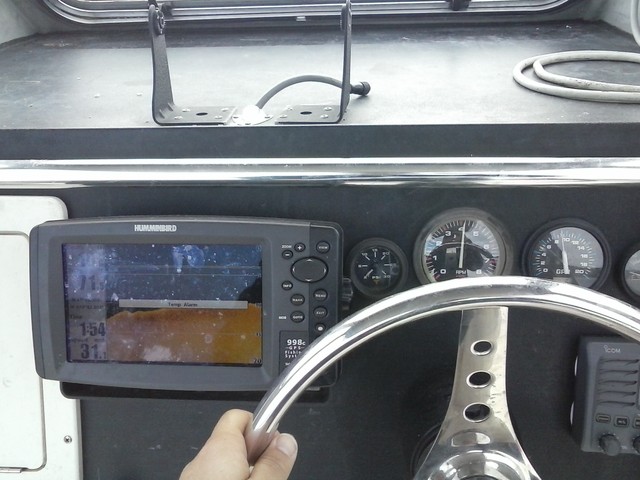
__________________
1971 222 Hiliner 1973 23 Seacraft Center Console 1973 23 Seacraft Sceptre 1971 25 Seacraft Seafari 1972 28 Cary
|
|
#5
02-26-2016, 12:52 AM
|
||||
|
||||
|
My 81 150 is the most fuel efficient engine I EVER ran in a large outboard. It was on a bass boat, but I could run for HOURS on a 14 gallon tank. Running along at 3600 or so it only burned 4-5 GPH which was a FAR CRY from my 2.5L XRI 150 I had on my flats boat that burned 11-12 GPH running the same speeds at teh same RPM's with the same pitch prop.
__________________
2011 SUNDANCE B20CCR SKIFF, 2011 YAMAHA 90HP 4 STROKE, 2011 KARAVAN SINGLE AXLE ALUMINUM TRAILER, LOWRANCE ELITE-7 HDI, MINN KOTA RIPTIDE TROLLING MOTOR 2000CC HYDRA-SPORT 225+HP EVINRUDE SOLD AND THE PINK JEEP!!!! R.I.P. http://www.wellcraftv20.com/communit...ad.php?t=11664
|
|
#6
02-26-2016, 08:31 AM
|
||||
|
||||
|
I have an 81 2.4 200 merc on my boat now and love the thing, it replaced an 88 175 johnson. The difference in fuel economy is night and day, the 2.4 merc wins hands down
__________________
Boatless
|
|
#7
02-26-2016, 11:19 AM
|
||||
|
||||
|
Quote:
__________________
2011 SUNDANCE B20CCR SKIFF, 2011 YAMAHA 90HP 4 STROKE, 2011 KARAVAN SINGLE AXLE ALUMINUM TRAILER, LOWRANCE ELITE-7 HDI, MINN KOTA RIPTIDE TROLLING MOTOR 2000CC HYDRA-SPORT 225+HP EVINRUDE SOLD AND THE PINK JEEP!!!! R.I.P. http://www.wellcraftv20.com/communit...ad.php?t=11664
|
|
#8
02-27-2016, 03:04 AM
|
||||
|
||||

Quote:
In many cases the difference between a 4500btu or a 5000btu is the size of the evap coil with the compressor being the same size for both of them. The electric usage is less per btu with the larger unit while achieving the same RH decrease and cooling. And of course, a case could also be made that using several window units to cool a home will cost more than running just one large central unit to do the same thing, because the central unit will be running one compressor on 220v while the window units will be running multiple compressors at 115V. (But that's no longer comparing apples to oranges, so it's really not a good comparison). Additionally, the compressors duty cycle is a good thing to know while sizing a unit for a particular job.. Some need to have a rest period of a certain percentage of their operating time, to give the compressor time to cool down. You want this to happen to prevent breakdowns and to prolong the life of the compressor in your A/C unit. Usually, the duty cycle is expressed as a percentage of a certain time frame, often a 10 minute segment. So a duty cycle of 50% for a particular brand and model of A/C would mean that this particular unit could run steadily for 10 minutes, and then it must have a 10 minute rest period before it kicks in to cool again. Often it's the home owner that gets caught in the duty cycle trap, not knowing what the duty cycle of their unit is, and burning it out prematurely through too prolonged a usage. The point being that any money you might save in electricity by running a higher duty cycle unit might be negatively impacted if your unit fails in X years instead of Y. I think the same could be said for a 200hp vs a 150hp. If all you're doing is cruising along at say 30 knots wouldn't the 200 be just loafing along at a lower rpm while the 150 would need to be running at a higher rpm just to maintain the same speed? I'd think that the 200 would be more fuel efficient under those conditions. (And really, when you're out in the ocean, you hardly ever get the nice flat seas that allow you to really let it all hang out. Most times it's 30-35 if you're lucky).
__________________
1987 V20 w/1987 150HP Yamaha on a Shoreland'r Trailer 1978 16.5 Airslot w/1996 120HP Force on a Four Winns trailer 1996 V21 w/1993 200HP Mercury on a Shoreline Trailer All towed by a 5.7L Hemi Durango. If God didn't have a purpose for us we wouldn't be here, so Live simply, Love generously, Care deeply, Speak kindly. (Leave the rest to God)  Silence, in the face of evil, is itself evil. Not to speak is to speak, not to act is to act. God will not hold us guiltless. Last edited by Destroyer; 02-27-2016 at 03:33 AM.
|
|
#9
02-27-2016, 06:43 AM
|
|||
|
|||
|
The equation also includes evaluation of " total cost "
Comparing 200 hp Etec G1 to 4 strokes, the 4's get considerably better fuel economy in most ranges of running. The 4's however require more frequent and more expensive maintenance, so it becomes a matter of how many hours running to make up for the additional costs. The Etec G2 fuel economy jumps another 10-20% closing that gap. So for use on a V, I'd say the ultimate fuel economy would come from a 150hp 4 stroke, providing a cruising range well over 300 miles on 60 gallon tank.
|
|
#10
02-27-2016, 10:39 PM
|
||||
|
||||
|
Quote:
As to the 200 loafing along VS the 150 spinning up, this is only true to a small degree. It takes X amount of HP to push a vessel at Y amount of speed. And for the most part, it takes pretty close to Z amount of fuel to make X amount of HP. Where the biggest differences come in is in the engines efficiency to produce HP. The 2.4L 200HP engine was FAR more efficient than the 2.0L 150 at putting out X amount of HP. Or look at it this way. A mid 80's 150 EVINRUDE will gulp down an EASY 12 GPH cruising along at say 4400 RPM's cruising putting out say 120 HP. A 2.0L MERCURY doing the same exact RPM's puttting out the same exact amount of HP would burn probably 8-9 GPH. Now my old 140 EVINRUDE running along even at 5000 RPM's probably putting out the same 120HP would do this burning around 7-8 GPH, and it's turning more RPM's than the other 2, using less fuel than either one doing it. Or take a MERCURY 2.5L engine. It could be had anywhere from 150-280HP, but only to 200HP for feeshing engines. Now the same basic engine(I realize they had horizontal and vertical reed engines as well as I believe some had finger ports, and some did not) with a 50HP power spread, and yet they all burned with a few GPH of each other running along at say a 4000 RPM cruise.
__________________
2011 SUNDANCE B20CCR SKIFF, 2011 YAMAHA 90HP 4 STROKE, 2011 KARAVAN SINGLE AXLE ALUMINUM TRAILER, LOWRANCE ELITE-7 HDI, MINN KOTA RIPTIDE TROLLING MOTOR 2000CC HYDRA-SPORT 225+HP EVINRUDE SOLD AND THE PINK JEEP!!!! R.I.P. http://www.wellcraftv20.com/communit...ad.php?t=11664
|
 |
| Thread Tools | |
| Display Modes | |
|
|









 Hybrid Mode
