
|
|
|
|
#1
|
|||
|
|||
 86 fuel tank removal
well i having no luck with this fuel tank removal, i broke off the fuel tank outlet, and the fuel tank inlet is slightly crush, the tank area around the inlet flexes, but that's all i get. i dont want to remove cap, or cut any of the stringers of frame. last hope will be to fill tank with water to removal any gas uels and cut tank open :( any another ideals out there.
jet 

|
|
#2
 02-28-2013, 12:58 AM
|
|||
|
|||
|
i use a tree chain saw to get my out i did not have to cut the stringers if you be careful you can get it out you have to cut deep then use the engine lift to take it out hope to help
 
|
|
#3
03-02-2013, 07:38 AM
|
||||
|
||||
|
Quote:
|
|
#4
03-02-2013, 07:31 PM
|
||||
|
||||
|
I have an 85 steplift and considered this myself. I chose to leave it in since I see no reson to pull it. Why are you removing it in the first place? I can understand preventive maintenance, but is there a failing tank issue with these boats I dont know about? Also, your 1 1/2" filler hose looks like mine, would you replace that too or is it ok to have fine exterior stress fractures since its so thick anyway.
|
|
#5
03-02-2013, 08:07 PM
|
|||
|
|||
|
How about the possibility of cutting around the top perimeter of the old tank and finding a new tank to fit inside of the old tank.

|
|
#6
03-02-2013, 11:41 PM
|
|||
|
|||
|
86 fuel tank removal
Wedsday I will try again, this time I will wrap the rope around the fuel inlet and fuel vent, using the eng lift. If that fails, I will try to use the steel pipe in the tank method. I haunt had any luck finding a cable saw to cut under the tank. Since the tank is the original one I don't trust it's integrity unless I have it inspected or replace. I also wish to inspect the area under the tank and the PVC drain line that runs from the two forward wells. Thanks everyone your inputs
Jet 
|
|
#7
03-03-2013, 01:56 AM
|
|||
|
|||
|
if i am not wrong there is some type of belts on the side of the tanks you will need to cut deeper in to those and close to the bottom at the tank as possible
i pull my out in trow the small gate valve in the tank
|
|
#8
03-03-2013, 07:42 AM
|
||||
|
||||
|
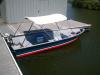
Manny, your boat looks a little different than my '82 cuddy, but still very similar as well. I did not have anything around my tank but foam and the two braces across the top.
Titan, these tanks are absolutely problematic, but not all have the problem. They are aluminum tanks surrounded in open cell foam. Once water gets in the foam, it stays there. The foam holds the water against the tank for years and corrosion sets in. One of the causes I think is the way the boat is plumbed to get water from the cuddy and the front of the deck to the bilge. There is a 1" PVC pipe laid across the bottom and through each bulkhead - 1beneath the cuddy door, 1 forward of the fuel tank, and 1 behind the tank. The holes where the pipe passes through the bulkhead did not appear to be sealed in any way, (much like the holes drilled through the stringers against the transom to allow water into the bilge that may have snuck in through the rod holders??) Very poor and lazy design, IMO. As we know, water takes the path of least resistance and always obeys the laws of physics, so it eventually rots out the bottom of the bulkheads and gets into the foam. This was what I found on my '82, anyway. Another problem that I found with my tank was the fill inlet. The clamp was too heavily tightened to secure the fill hose and I believe it pinched through the rubber, exposing the wire inside. As the wire corroded, it rubbed against and corroded the underside of the fill inlet to the point where there was a large hole and that was the primary source of all the fuel I smelled when I refueled. Escaping fuel also settled into the foam from this source, so I think my tank was in worse shape than most.
|
 |
| Thread Tools | |
| Display Modes | |
|
|







 Hybrid Mode
